

L’Organo and the Renaissance of Piccolo Spoleto
Charleston, South Carolina, has always pulsed with artistic energy, but few events capture the city’s soul quite like Piccolo Spoleto. Now in its 48th year, the festival—running May 22 to June 7, 2026—has emerged stronger than ever after the disruptions of COVID-19.
With more than 250 events celebrating local stories, traditions, and talent, Piccolo Spoleto isn’t just back; it’s experiencing a full-blown renaissance, much like Charleston's cultural scene in the 1920s. And at the heart of this revival sits L’Organo, the beloved series of free organ concerts performed in historic churches,
Piccolo Spoleto was launched in the late 1970s as the accessible, community-driven counterpart to the world-renowned Spoleto Festival USA. While its bigger sibling draws international stars and ticketed spectacles, Piccolo focuses on affordability and inclusivity. Think free outdoor art exhibitions in Marion Square, sunset serenades with the Charleston Symphony on the steps of the US Customs House, children’s programs at the library, and a dazzling array of music, theater, dance, and literary events.
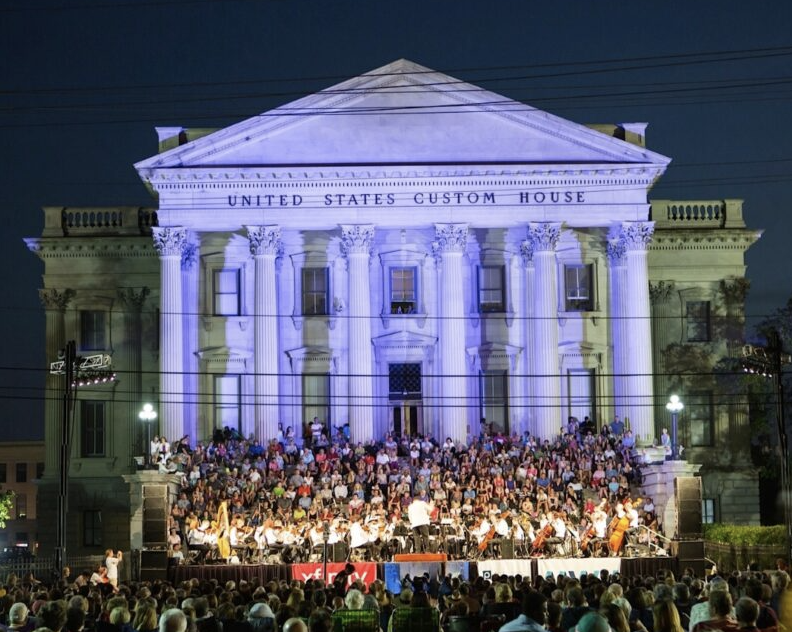
Charleston’s Symphony Orchestra opening the Piccolo Spoleto Festival
Many offerings are completely free or pay-what-you-wish, making high-caliber arts available to everyone. The pandemic hit hard. In 2020 and 2021, festivals worldwide scaled back or went virtual, and Piccolo Spoleto was no exception—relying on outdoor events and limited programming to stay alive. But the return has been swift and spirited.
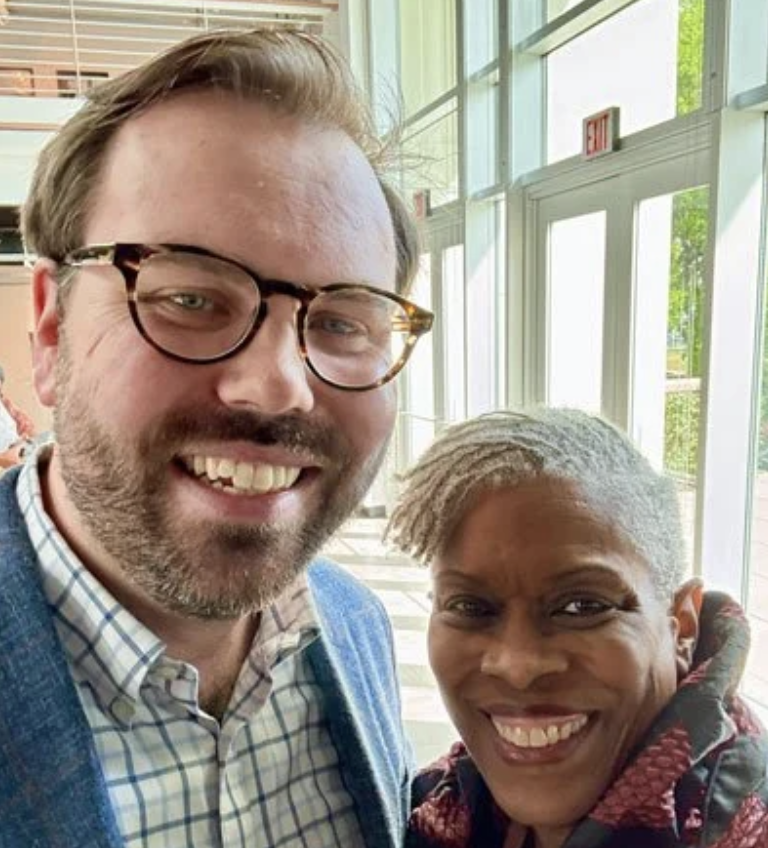
Nick Quardokus (L’Organo Chair) and Rochelle Riley
Now, under the dynamic new leadership of Rochelle Riley, the City of Charleston’s newly appointed Director of the Office of Cultural Affairs, the 2026 season has been billed as the biggest since COVID. Attendance at signature events has rebounded strongly, volunteer involvement is thriving, and the festival’s economic and cultural impact is once again pumping vitality into the Holy City.
Riley, who stepped into the role earlier this year, has brought fresh energy and vision, emphasizing community healing and innovative programming that reconnects Charlestonians with their artistic roots. This renaissance isn’t just about numbers; it’s about shared joy after isolation, and Piccolo Spoleto—guided now by Riley’s leadership—has leaned into that role with open arms.
No event better embodies this resurgence than L’Organo: The Organ in Recital. For over 45 years, this series has been a Piccolo Spoleto mainstay, organized by dedicated volunteers from the Charleston chapter of the American Guild of Organists and sponsored by the Office of Cultural Affairs.
In 2025, it presented 12 daily free recitals across nine historic churches, drawing noticeably larger crowds than in the immediate post-COVID years. The 2026 lineup, under new committee chair Nicholas Quardokus, promises even more excitement with an outstanding roster of emerging and established talent.
What makes L’Organo special? It transforms a morning—or, in one unforgettable case, an evening—into a transcendent experience. Most weekday concerts begin at 10 a.m., perfectly timed so attendees can flow into other festival events, such as chamber music at Dock Street Theatre.
But the series also delivers standout evening programming, including a not-to-miss silent film concert at the Citadel’s Summerall Chapel on May 28. Internationally renowned Juilliard-trained organist and composer Dorothy Papadakos will deliver a riveting live improvisation accompanying classic silent movies, her virtuosity channeling the comedic genius of Charlie Chaplin with wit, drama, and breathtaking precision.
On the chapel’s massive organ—one of the state’s largest—the performance turns black-and-white cinema into a multisensory spectacle, complete with big-screen visuals and the organ’s thunderous voices filling the historic space. It’s a perfect fusion of Piccolo Spoleto’s spirit: innovative, accessible, and deeply rooted in Charleston’s heritage. Concerts are held in some of Charleston’s most architecturally stunning and historically significant churches—places where music has echoed for centuries.
At St. Michael’s Church, built in 1761, you hear the English-style Kenneth Jones tracker organ whose case dates back to 1764. The Cathedral of St. John the Baptist showcases a magnificent French-style Bedient instrument, while St. Matthew’s Lutheran Church features a powerhouse American Classic Austin organ.
Other venues include the Cathedral of St. Luke and St. Paul (home to the annual Ben Hutto Memorial Concert on a Gabriel Kney tracker), Mother Emanuel AME Church with its Zimmer organ and rich Gospel division, and more intimate spaces like St. John’s Lutheran or St. Clare of Assisi on Daniel Island.
The programs are as varied as the instruments. You might hear Bach’s majestic preludes and fugues, romantic works by Franck or Widor, modern compositions, or playful selections like transcriptions of Mussorgsky’s Pictures at an Exhibition. Many performances include big-screen video relays so audiences can watch the organist’s feet flying across the pedalboard—a detail that turns technical mastery into visual theater.
Performers range from Juilliard-trained rising stars (several named to The Diapason’s “20 Under 30”) to local favorites and international guests. In 2026, highlights include Charleston’s own Matthew Wilkinson making his L’Organo debut on May 25 at St. Matthew’s, alongside the Chaplin-inspired spectacle at the Citadel.
For tourists, L’Organo is pure magic. Charleston’s downtown is famously walkable, so you can catch a morning recital, wander past rainbow row houses, grab shrimp and grits for lunch, and still make an afternoon chamber concert—or cap your day with the Citadel’s silent-film extravaganza.
L’Organo’s Concert Series is an unforgettable experience of the city’s layered history—architectural, spiritual, and musical—without crowded ticket lines or high prices. Families, couples, and solo travelers all rave about the intimate scale: no stadium acoustics, just the pure power of pipe organs (or, in the case of Papadakos, the organ breathing life into Chaplin’s timeless antics).
For residents, it’s even more meaningful. In a city that treasures its heritage, L’Organo keeps classical organ music alive and accessible while adding fresh twists, such as a silent-film night. It supports local musicians, draws new audiences to the churches, and fosters a sense of pride in Charleston’s cultural assets.
Many locals return year after year, bringing friends or introducing out-of-town guests. The FREE admission removes barriers, turning what could be an elite experience into a democratic one. L’Organo stands as its most elegant symbol: free, profound, and deeply rooted in Charleston’s historic soul.
Whether you’re visiting for the first time or have called the Lowcountry home for decades, make time for these concerts—especially the Charlie Chaplin silent-movie evening at the Citadel. Slip into a pew, let the organ’s first notes roll through the stained-glass light (or flicker across the silver screen), and feel the city’s creative spirit reborn.
The festival runs just two weeks each spring, but its impact lasts all year. Charleston Events has a useful calendar to navigate the myriad of activities for Spoleto Festival USA and Piccolo Spoleto. Experience the music—and movies—that’s helping Charleston sing (and laugh) again. You won’t just hear history—you’ll be part of its next chapter.
