

L’Organo 2026 – Reviews
My colleagues and I are delighted to review L’Organo’s 2026 Concert Series for Piccolo Spoleto. Based on the feedback from many enthusiasts, it was a resounding success. On behalf of the Charleston Chapter, please find below the review we submitted to the American Guild of Organists.
I would like to thank Daniel Damaschke (the current Dean of the AGO Chapter), Katie Holland, and Nick Quardokus for their insightful review contributions and to the loyal members of the AGO Chapter.
Monday, May 25th, St. Matthew’s Lutheran -- Matthew Wilkinson
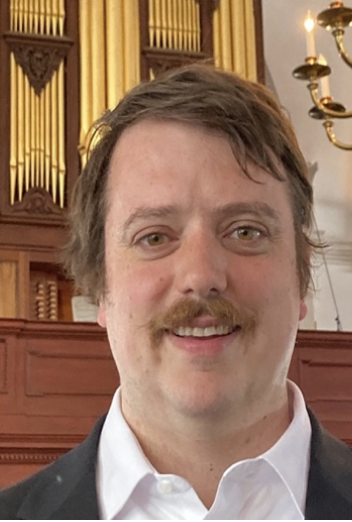
What a stunning opening to the 2026 L’Organo series! Matthew Wilkinson, Music Director at St. Michael’s Anglican Church in Charleston, SC, gave us a splendid performance that from the very beginning left no question that he was a seasoned performer and his audience was in good hands. We couldn’t be more proud to call him one of our own.
The concert began with Georg Muffat’s Toccata X. In Mr. Wilkinson’s words, this provided the opportunity to demonstrate the various timbres of the organ, and it was an opportunity he met with polished skill. The mighty sounds he pulled from St. Matthew’s instrument assured the audience that this was a concert they would be happy they didn’t miss.
J. S. Bach’s beloved Passacaglia and Fugue in C minor was performed with notable artistry and a depth of color rarely heard, or easily achieved. Desseins Eternels (from La Nativité) by Olivier Messiaen was handled with the same care and attention to detail, filling St. Matthew’s with ethereal sounds that were then seamlessly woven into Healey Willan’s Chorale Prelude on “Nicaea.” Wilkinson performed the tender arrangement with what can only be described as a ‘loving touch’ filled with peaceful devotion.
Franz Liszt’s Fantasy and Fugue on “Ad nos ad salutarem undam” was a fitting finale to a lovely concert. Wilkinson performed the piece–nearly thirty minutes in length–with vivid artistic flair and precision. It was a sweeping display of focused confidence, swelling into a spectacular finale that was worthy of every moment of applause.
Tuesday. May 26th, First (Scots) Presbyterian -- Alex Straus-Fausto
It’s certainly not very usual for organ recitals to start with a piece that elicits cheers and bravos from the listeners — particularly at 10 in the morning! Yet such was the case when young rising superstar Alexander Straus-Fausto begin his 2026 L’Organo recital at First (Scots) Presbyterian Church with his own transcription of Bernstein’s “Overture to Candide.” To be sure, it’s a cheeky piece, and Alex relished all the jazzy rhythms. And his deft registrational skill brought out all of Bernstein’s calliope-like orchestrations; a brilliant start.
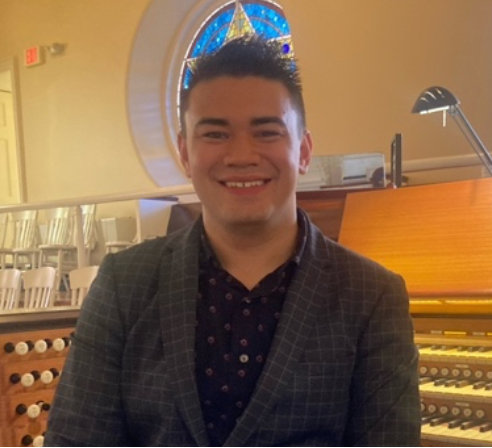
Next came Wagner’s Pilgrims’ chorus from Tannhaüser, in the arrangement by the great early twentieth century virtuoso Edwin H. Lemare. This brought out all the power of the instrument, both in brassy fortissimos and dreamy string celestes. And it was fascinating for the audience to see, thanks to the video screen, just how he managed to play so many notes at one time, by frequently “thumbing down” to play three keyboards at once.
In the ensuing “Deux Esquisses” of Dupre, those same video screens enabled us to see his incredible pedalling, up and down the pedalboard at lightning speed. A completely different mood was painted by Piazzola’s Oblivion, with its sultry harmonies and wailing solos. Who would have thought — Tango in church?
The Karg-Elert Ave Maria that followed, though elegantly played and registered. lowered the temperature somewhat with its “churchy” ethos. But then we were launched into the great Sonata of Reubke, played with all the passion and panache it demands. And dazzlingly fast! In the fugue, Alex showed admirable registrational restraint, letting it become a slow burn all the way up to a stentorian close, with the frenzied cadenza-like pedal riffs charging like race-horses.
Part of the attraction of Spoleto is watching the rising generation that is coming to prominence — Alex Straus-Fausto is certainly an organ virtuoso to watch out for. Bravo!
Wednesday, May 27th, Cathedral of St. John the Baptist - Jacob Carl Taylor
What a marvelous morning in France we enjoyed (without having to buy a plane ticket to Paris!) The Gallic sounds of the Bedient organ, allied with Jacob Taylor’s immaculate playing in the spacious acoustic and architectural splendor of the Cathedral of St. John the Baptist, all combined to offer a connoisseur’s treat.
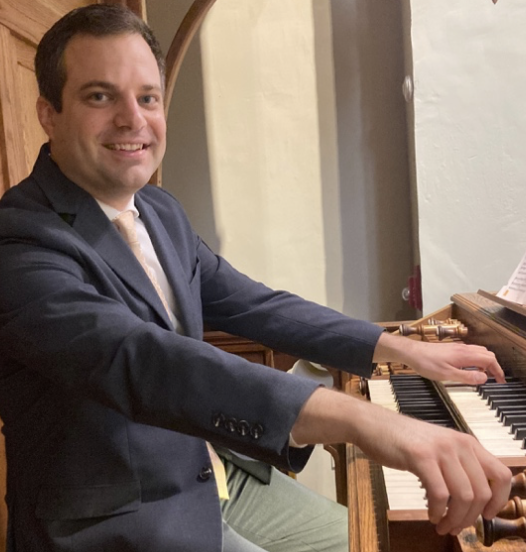
Beginning with De Grigny’s “Ave Maris Stella”, we could admire the delicacy of Jacob’s ornamentation and authentic registrations (16’ tierce in the trio, snarling reeds in the Dialogue); then we moved to the serene sound-world of Franck’s Prelude, Fugue and Variation, where the spaces were beautifully judged in the adagio leading to the velvety sounding Fugue; the concluding Variation was spotless and sparkling.
Then followed some remarkable Bach with a French accent; using the Dupre edition, Jacob treated us to a reading of the Toccata, Adagio and Fugue like none other, letting the acoustic heighten every gesture in hands then feet in the Toccata, leading via the plaintive Adagio to the rollicking Fugue, delivered with exemplary accuracy and panache.
The hauntingly authentic sound of the Flute Harmonique floating through the Gothic vaulting did not disappoint in the Andante sostenuto from Widor’s “Symphonie Gothique,” this led to the final work, the less-well-known “Entrée, Canzona and Sortie” of Marcel Dupré. From the march-like grandeur of the Entrée, through the melodic Canzona with its accompanying, typically exotic Dupré harmonies, to the brilliance of the final toccata-like Sortie, this was the perfect ending to a splendid recital. Magnifique!
Thursday, May 28th, “Mother” Emmanuel AME - Dr. Leo Davis
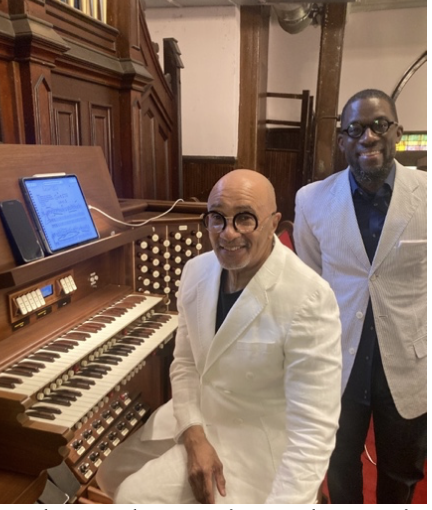
Dr. Leo Davis’s recital was a perfect combination of programming, instrument, and sacred space. Played to a near-capacity crowd at Mother Emanuel AME Church, Davis’s heart-felt playing moved many in the audience to generous applause throughout the concert. Beginning with Mark Miller’s Toccata on ‘Lift every voice and sing’, Davis showed his technical facility from the onset, providing brilliance and clarity to the piece’s active figuration.
Following the Toccata were three pieces of the historical organ repertoire by Bach, Florence Price and Mendelssohn, utilizing both the classical choruses and the softer solo stops of the Cornel Zimmer organ.
Perhaps the sonic and emotional apex of the program was Carl Haywood’s Improvisation on ‘We shall overcome’. In a toccata style, the melody of the well-known anthem of the Civil Rights Movement echoed throughout the sanctuary first on solo reed, then full pedal, and finally a triumphant chorale setting. The program concluded with two pieces: My Lord, what a Morning by Raymond Hahn, and followed by I Love the Lord, a new piece by Joseph Joubert in memory of the late gospel icon, Richard Smallwood. Both of these pieces created a stirring close to the program, showcasing the unique gospel division of the organ at Mother Emanuel, tibias and all.
Thursday evening, May 28th, Summerall Chapel, The Citadel SPECIAL EVENT! Dorothy Papadokus accompanies 3 Charlie Chaplin Movies
A sizable audience were treated to Dorothy’s unique artistry, finding a myriad of colors on the Citadel’s Zimmer organ, to mirror the on screen antics of Charlie Chaplin and his gang. She knows these movies like the back of her hand, and began the evening with a quick history and overview of Chaplin’s amazingly successful career.
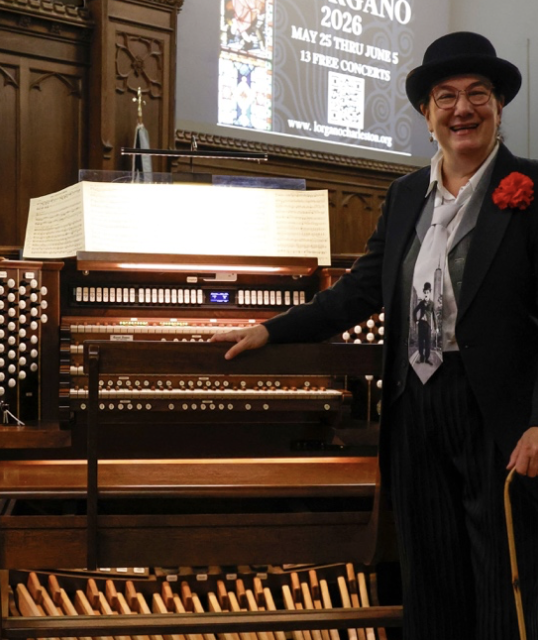
Then followed the three movies in quick succession: “The Cure”, in which the evils of drunkenness were treated to satiric ridicule (in a good cause); “The Immigrant” in which all the trials and terrors of arriving in New York harbor, enduring Ellis Island, and encountering New York City are lambasted to hilarious effect; and “The Adventure” with its fast-paced comedy scenes and sentimental love interest.
All this was mirrored in Dorothy’s amazing playing. By turns virtuosic, beguiling, terrifying and titivating, she captured every emotion on the screen above, with brilliantly varied registrations, figurations, melodies and sound effects. She modified the stentorian tones of the great Zimmer organ to let us hear every side of it, from the noble reeds and orchestral woodwinds to the shimmering strings and velvety diapasons and back, all done smoothly and effortlessly; it was a true tour de force!
The audience rose and applauded vociferously after the last echoes faded! Bravo Dorothy!
Friday, May 29th, St. John’s Lutheran – Jack Cleghorn
The experience of sitting in the pews for the concert with Jack Cleghorn, Choirmaster and Organist of St. Paul’s Episcopal Church in Fayetteville, Arkansas, could only be described as cinematic. His technical prowess bravely led the charge as he took the audience on a colorful journey with his carefully selected (and thoughtfully programmed) repertoire.
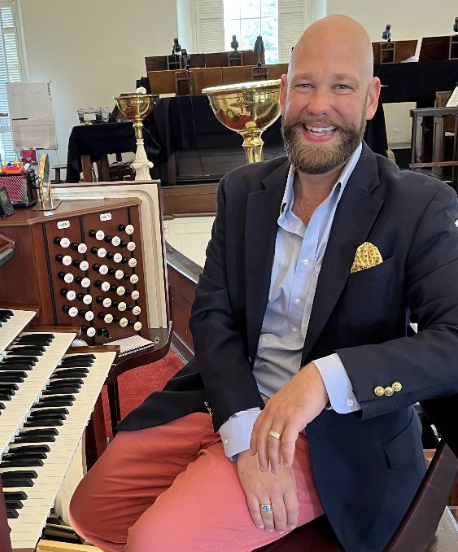
Norman Cocker’s Tuba Tune was masterfully executed and a happy start to a lovely concert. Cleghorn’s registrations showcased the vibrant reeds of St. John’s instrument, even giving us a taste of the beautiful Trompette en Chamade.
In stark contrast were two pieces, The Squirrel by Powell Weaver, which Cleghorn brought to life with frivolity and excitement, and Serenade for Organ by Derek Bourgeois, which he performed masterfully and even gave us permission to chuckle, an invitation we eagerly accepted.
The Fantasia and Fugue in G minor by J. S. Bach was performed deftly and with tasteful yet dramatic flair, showcasing his polished technique and broad range of musical acumen. We were also left enraptured by Noel Rawsthorne’s Prelude on “Londonderry Air,” a beautiful arrangement made even more stunning by Cleghorn’s registrations and the rich color of his solo choice.
However, it was Louis Vierne’s Carillon de Westminster that showcased the full breadth of Cleghorn’s artistry. It was performed with vigor and masterful accuracy, the melody sparkling throughout, even during the chaotic development in the second half, a feat not easily achieved. It was a breathtaking conclusion to a splendid and delightful concert, which brought the audience to its feet.
Saturday, May 30th, The Chapel, Bishop Gadsden Retirement Community
Without Borders: Organ and the Human Voice: Dalaie Choi, organ; Inyoung Lee, soprano The program’s premise was a duet between organ and voice, demonstrating the organ as an artistic partner in classical, Broadway, art song, and operatic repertoire. In this, organist Choi and soprano Lee excelled. Their interplay was nuanced and expressive throughout, though one issue persisted: the organ was consistently too loud in the shared selections. Given the artistry of both performers, this likely reflects the challenge of judging balance accurately during rehearsal rather than any lack of musical sensitivity. Lee captivated the audience in every vocal selection with impeccable vocal technique, a sweet, open tone and excellent control throughout her range. Bach’s Sheep May Safely Graze was especially memorable for phrases that emerged almost imperceptibly, blossomed, and gently faded within a single breath. Bach’s Prelude and Fugue in A Minor, BWV 543, was enriched by the warmth of the Schoenstein organ’s sound and Choi’s virtuosic performance. Her ambitious tempos remained controlled, and the fugue’s demanding cantus firmus remained prominent to the exciting end.
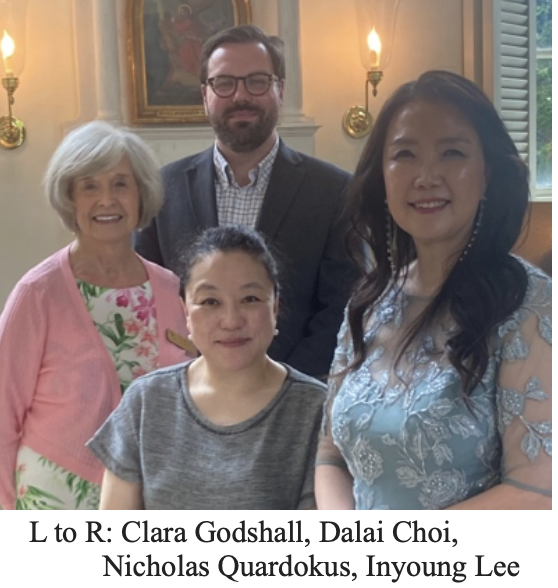
The contrasting Broadway selections, I Could Have Danced All Night and Till There Was You, revealed more strengths in both performers’ artistry. In the former, the organ became a second voice through a reed solo over which Lee floated a dreamy descant. In the latter, warm strings and celeste created a persuasive argument for installing organs in every local theater. Langlais’ Fête showcased Choi’s virtuosity through brilliant pedal work, bell-like echoes, and the composer’s characteristically unexpected final major chord.
Youngjo Lee’s Gyengsangdo Arirang was a jewel, with Lee bringing deep yearning, beautiful tone, and dramatic climaxes to the Korean folk song. The Bishop Gadsden Chapel and Schoenstein organ are made for Gershwin (“Summertime”), while Yo soy María from Piazzolla’s María de Buenos Aires introduced us to the irresistible energy of tango rhythms and fiery drama.
Finally, Liszt’s Variations on Bach’s “Weinen, Klagen, Sorgen, Zagen und Crucifixus” displayed intense Romantic harmonies, colorful registrations, and dramatic dissonance layered over Bach’s chromatic bass ostinato. Through this, Liszt transforms grief into consolation as the chorale Was Gott tut, das ist wohlgetan (“What God does is done well”) emerges from the texture. Its blend of raw emotion expressed through organ virtuosity provided a fitting conclusion to a program showcasing two exceptional musicians.
Sunday, May 31st, St. Clare of Assisi -- R. Monty Bennett
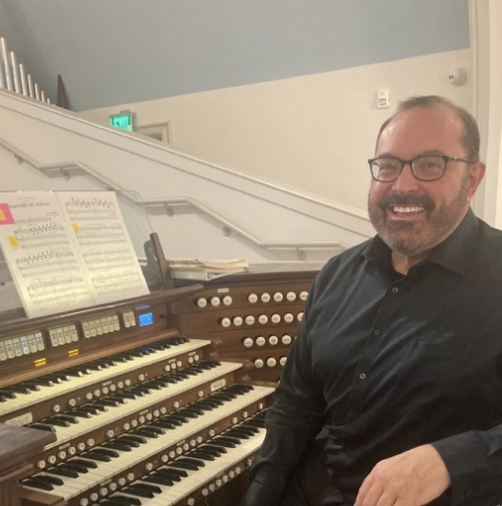
Organist Monty Bennett from Charlotte presented a perfect hour of music for a Sunday afternoon at the beautiful church of St. Clare of Assisi on Daniel Island, with its lovely acoustics and glorious stained glass windows.
Beginning with the spectacular “Variations de Concert” of Joseph Bonnet, thanks to the video relay we were able to observe Monty’s amazing pedal technique, including octave playing at high speed. “His feet got chops” as you might say!
This was followed, in perfect program planning, by the serenity of Vierne’s Andante from Symphony 1, with its gentle chromaticism elegantly played. Then came the Pastorale of Cesar Franck, another excellent choice for time and place, even if the performance was somewhat more rhapsodic than what one often hears.
But Saint-Saens “Allegro Giocoso” from his seven improvisations was certainly a rollicking contrast, with its imposing middle section; once again we were able to watch Monty’s impressive pedal technique on the video. Pierne’s Cantilene was characterized by a melodic oboe/string dialogue resembling a shepherd’s piping, and ended with a luscious string/vox Humana melange. And the “Fiat Lux” of Dubois led from a mysterious start to a triumphant close.
The closing Franco-African Triptych, by Nigerian composer Godwin Sadoh which Monty had premiered, was a real find, and a perfect ending. The first movement, “The Dancing Shoes” was another moment for Monty’s feet to shine, with its catchy assymetrical rhythms; then the succeeding Priere movingly incorporated the South African folk song “N’Kosi Sikelele Africa.” To close, the Fantasia Africana displayed the repetitive rhythmic patterns and melodic phrases of African music; the stentorian finish reminding this listener of the exuberance of African dancing.
The substantial audience applauded long and gratefully.
Monday, June 1st, First (Scots) Presbyterian -- Jessie Zixi Deng
True comments overheard:
“Cleverly programmed, brilliantly executed.” Clara Godshall
“Thanks for making our organ sound so good!” Anthony WIlliams
Dupré’s Prelude and Fugue in B Major, Op. 7, No. 1, had all the hallmarks of an ideal opener: bright, balanced plenums with reeds, a sense of exhilaration and playfulness in the prelude, and a complex fugue subject that remained remarkably clear through skillful registration and precise articulation.
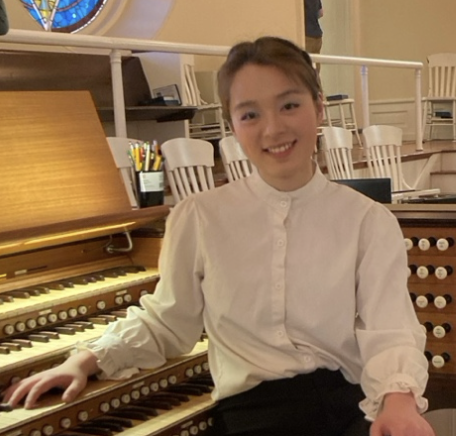
Qi Zhang’s Symphony in the Teapot was an intriguing work made even richer by the excellent program notes. Notable features included unusual combinations of mutation stops, which Ontko and Deng handled beautifully. The bubbling of tea seemed almost visible, and the audience marveled as Deng’s hands flew across the keyboards. Historical, cultural, and whimsical, the piece remained grounded in ordinary experience while inspiring attentive listening. After such an aurally demanding work, Langlais’ Huit Pièces Modales, Op. 9, No. 1, provided a soothing contrast with its lyrical melodies and Dorian modality.
Duruflé’s Prélude et Fugue sur le nom d’Alain demonstrated how a form is a playground for a composer's creativity. The gentle interplay between triplets and duplets created a sense of fluid motion, whether heard as a simmering teapot or gently rocking waves beneath the melody. The fugue contrasted beautifully with Dupré’s, opening with warm strings and foundations rather than brilliant plenum textures. The highest compliment I can offer is that it left me wanting to hear it again—and perhaps learn it myself.
Three movements from Calvin Hampton’s Five Dances for Organ followed: The Primitives, Those Americans, and Everyone Dances. Deng’s programming balanced contrast with continuity, and these lively movements radiated vitality and joy through driving rhythms and colorful harmonies. William McKie’s transcription of Walton’s Orb and Sceptre fulfilled the promise of the program notes, making full use of the organ’s orchestral palette. The grand march was bright, modern, and brilliantly registered, showcasing Deng’s technical command with panache.
Tuesday, June 2nd, St. Michael’s Church -- Ilona Kubiaczyk-Adler
Ilona Kubiaczyk-Adler’s program featured perhaps the most intriguing and off-the beaten path repertoire of this year’s festival. The concert featured music from eastern Europe and the Americas (particularly Mexico and Brazil).
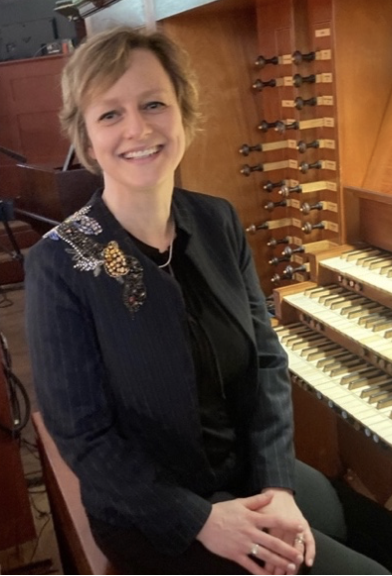
Unlike many programs of this concept, Adler proved with her outstanding execution that these pieces are truly deserving of more performances. Beginning with the virtuosic Fantasie in G Minor by German-Latvian composer Johann Gottfried Müthel, Adler from the beginning proved her mastery of the genre. The piece combined the Buxtehudian stylus phantasticus with nineteenth-century Sturm und Drang to create a novel work unlike much conventional organ repertoire.
The program was then followed by music by female composers Weronika Ratusinska (Poland) and Lesia Dychko (Ukraine). Both works showcased the beautiful single stops and soft ensembles of the Kenneth Jones tracker organ at St. Michael’s Church. Adler’s reading of Bach’s Nun komm, der Heiden Heiland and Toccata in D Minor (Dorian) were among the best performances of his music over the course of the festival.
After music by Villa-Lobos and Ramon Noble, Adler’s finale was a most interesting piece, Kosmogonik. Infusing jazz with references to western composers, the piece wove together multiple ideas, in a way that held together in a very convincing fashion.
Wednesday, June 3rd, Cathedral of St. Luke and St. Paul - The Bolena Duo
This concert marked a first in L’Organo history: a mother-and-son duo. Hailing from Staunton, Virginia, the accomplished pair, Virginia ("Gen") and Jonathan delighted the audience not only through the novelty of their relationship but also through a thoughtful program of lesser-known composers and gems from the American and English traditions. The repertoire showcased the clean, precise tonal palette of the 1976 Gabriel Kney organ.
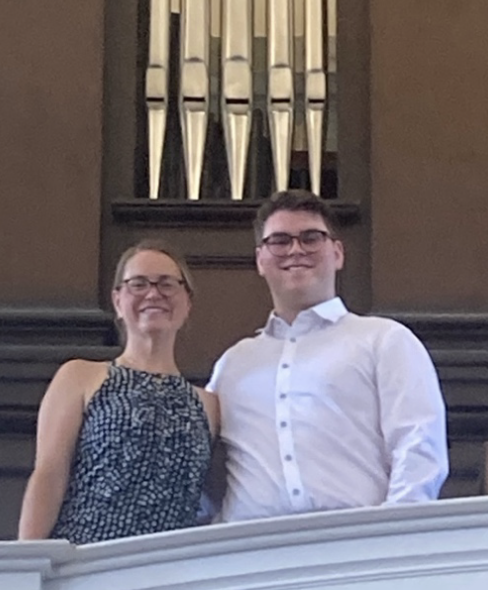
Approximately two-thirds of the program was performed by Gen, who opened with Fanny Mendelssohn’s Prelude for Organ. Majestic and vibrant, the work sparkled on the Kney’s silvery choruses. Gen played dramatically, pressing forward through the flourishes and crowning the performance with the addition of the pedal reed.
Mary Beth Bennett’s (b. 1954) Song of Peace in a Time of War combined a lyrical, hollow cornet solo with a more dissonant, modal section, which gave us a hint of Langlais’ Chant de Paix (Song of Peace). In Dame Ethel Smyth’s Chorale Prelude: Du, o schönes Weltgebäude, the organ’s beautifully articulate flute tone highlighted the accompaniment. Gen brought forth the sighing left-hand motive and a weighty pedal line that deepened the music’s expressiveness.
The second portion of the program featured three duets. Samuel Wesley’s An Introduction to Bach’s Grand Fugue in E-flat was followed by Vincent Novello’s four-hand, two-feet arrangement of J. S. Bach’s St. Anne Fugue—a work always welcome on an organ recital program. The third duet, Thomas Tomkins’ A Fancy for Two to Play, was originally composed for mother-and-child virginal, a keyboard instrument with two manuals. It was especially charming to hear it performed by an actual mother-and-son duo.
The program continued with Jonathan’s performance of William Byrd’s Fantasia d-final. Jonathan is an enthusiast of Byrd’s music and the English virginalist tradition and his command of the piece’s refined imitative counterpoint demonstrated technical virtuosity and a deep understanding of Renaissance style. Gen continued the program with two works that explored the organ’s warmer tones: Amy Beach’s Prelude on an Old Folk Tune and Christa Rakich’s Hommage à Gershwin: Quodlibet on Slane. The latter was a sweet nod to Charleston audiences, even if the organ’s German tonal palette could not fully capture authentic Gershwin sound.
The concert concluded thrillingly with Kenneth Leighton’s Paean, a bright, climactic piece with Pinkhamesque harmonies. The pinnacle of the piece for me was a sound familiar to “tracker lovers”: the brief settling of pitch as the fully engaged windchest yielded momentarily before recovering--a reminder that the organ’s voice is sustained not by electricity alone, but by breath, just as all living things are.
Thursday, June 4th, St. Matthew’s Lutheran - Christoph Hintermüller
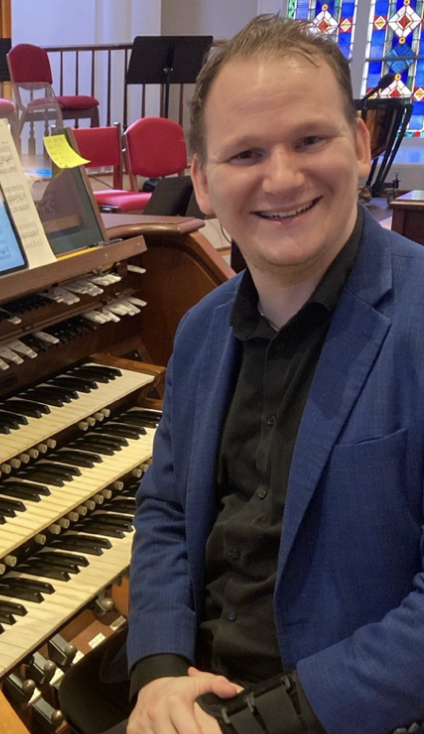
German native Christoph Hintermüller’s program at St. Matthew’s Lutheran Church fused music of his homeland with music from America. Hintermüller began with Bach’s monumental Prelude in E-flat Major. He took a while to settle, but eventually the piece ended in a rousing, convincing manner.
The program then took an even sharper German turn with variation sets on Haydns Kaiserlied by Max Birn and Ein Männlein steht im Walde by Franz Lehrndorfer. Aside from plentiful full-organ passages, these sets of variations showcased the charming colors (particularly flutes and reeds) of the Austin organ.
A highlight of the program was Hintermüller’s own transcription of The Lord of the Rings film music by Howard Shore. The performer’s arrangement was particularly compelling, combining the major themes in a cohesive mash-up. To end, Hintermüller offered a humorous and light-hearted closer: Pietro Yon’s American Rhapsody. Beginning with the theme of O Christmas Tree and ending with The Star Spangled Banner, the piece loosely connected several American melodies, finishing the musical journey from Germany to America.
Friday, June 5th, Summerall Chapel, The Citadel - Sarah Palmer
Recent Curtis graduate Sarah Palmer delivered a fitting finale recital of the L’Organo Festival. Technically dazzling from beginning to end, Palmer performed a varied and enjoyable recital on Charleston’s grandest organ, the Cornel Zimmer Op. 135 at Summerall Chapel on the campus of The Citadel.
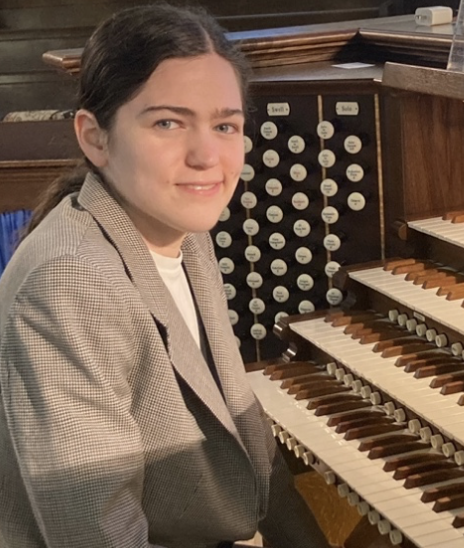
Palmer began with a fresh and rarely-played toccata by Anne Wilson, marked by rhythmic drive. She then demonstrated that she was just at home with Bach as with contemporary music, playing “the Wedge” prelude and fugue with sparkling articulation. Though the fugue tempo was faster than most interpretations, Palmer pulled it off gracefully.
The middle of the program featured folk-inspired music for organ, including Samuel Barber’s Wondrous Love and Whitlock’s Folk Tune. Both pieces displayed the myriad soft stops of the Zimmer organ, including particularly lovely celestes.
The end of the program was as energetic as the beginning, with a flawless reading of the Scherzo from Vierne’s 6th Symphony, and a rousing performance of Charles Ives‘s Variations on America, particularly fitting for this 250th anniversary year.
Postscript
To the committee’s delight, in addition to the artistic achievements noted above, this year’s series once again showed a significant (25%) increase in attendance (and revenue); one audience member, calling himself “Mr. Wonderful” (and we agree!) even rode his bicycle to all 13 programs!
And the quickly established rapport between Committee Chairman Nick Quardokus and the energetic new director of the Office of Cultural Affairs, Dr. Rochelle Riley, also bodes well for the future of the series.